
Saint Vincent and the Grenadines
History of Union Island
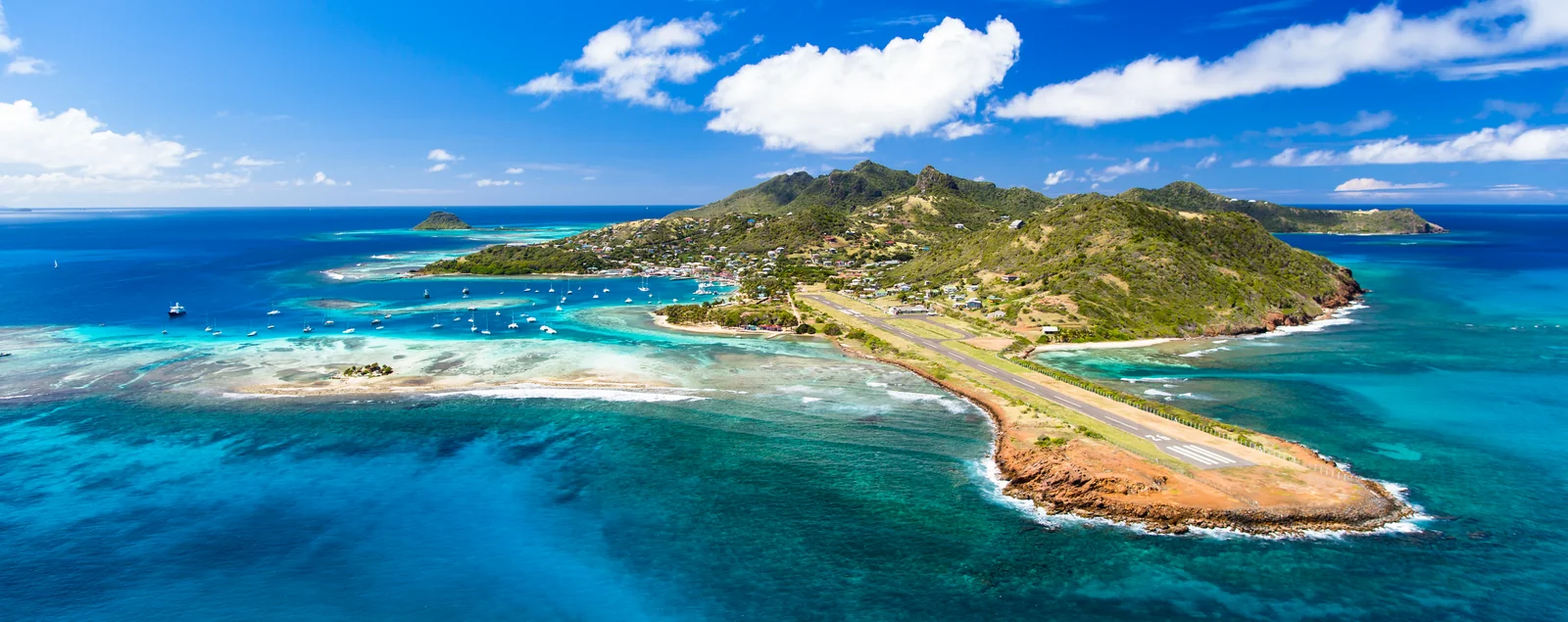
Union Island has never been as isolated as it looks on a map. People, boats, crops and ideas have crossed these waters for centuries. Behind the harbour at Clifton and the homes around Ashton lies a history of Indigenous settlement, cotton estates, hard-won freedom and lives carried far beyond the island.
That history also explains the Union visitors meet today: resourceful about water, connected to family overseas, shaped by the sea, and rebuilding after the extraordinary destruction of Hurricane Beryl.
Before the Harbour: Settlement, Cotton and Freedom
Union’s first inhabitants left pottery, shells and traces of settlement at places including Chatham Bay and Miss Pierre. Archaeological work confirms a substantial history before European colonisation, but the limited dating evidence does not establish a single year when people first arrived. It is a history still being pieced together from the ground, rather than one that begins with a European landowner.[1]
The Treaty of Paris of 1763 placed Grenada and the Grenadines under British control. In the following decades, cotton estates came to dominate Union. Historian John Edward Adams describes five properties being brought together under Samuel Span in 1776; the northern Grenadines were attached administratively to St Vincent in 1791.[2][3]
Those estates depended on enslaved labour. An 1817 colonial register records 588 enslaved people on Union Island. Later records name the Ashton, Clifton and Queensbury estates and document sales of people to other islands. The familiar place names therefore carry a difficult history: the island’s cotton economy was built on people who were denied control over their work, their movement and their families.[4]
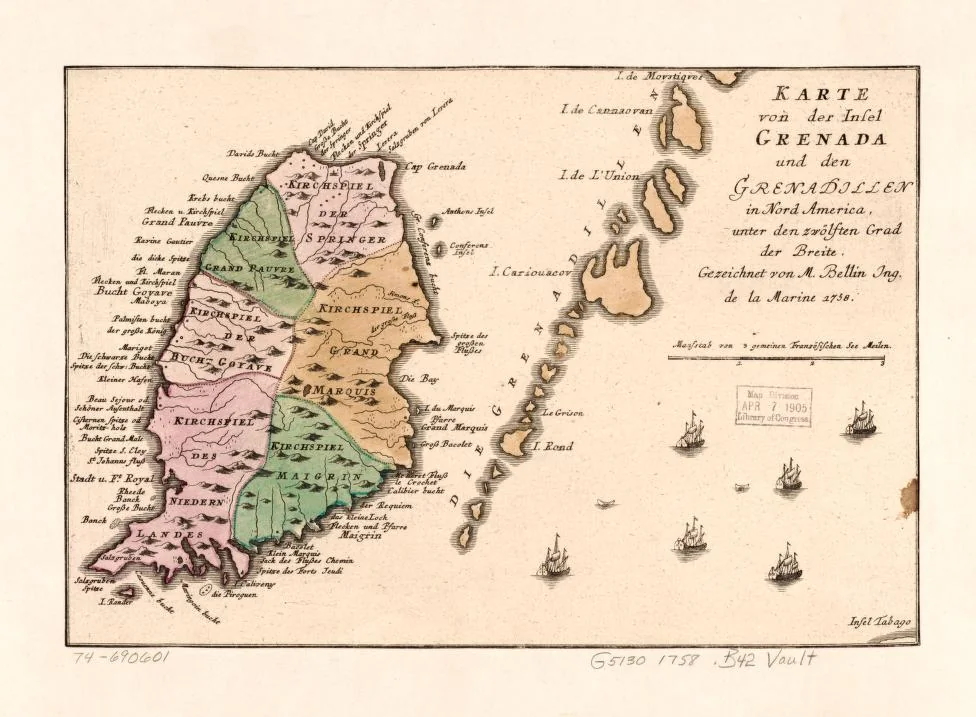
Abolition took effect on 1 August 1834, but compulsory apprenticeship prolonged coercive labour until 1 August 1838. Nor did emancipation come with compensation for the formerly enslaved. A surviving Union Island claim from 1836 records payment to an executor on the ownership side. Freedom changed the law; access to land and economic independence would take much longer.[5][4]
Land, Water and Lives Across the Sea
After emancipation, leaseholding and sharecropping kept many families tied to land controlled by larger owners. They grew cotton and food crops, finding ways to provide for themselves within those constraints. A government land settlement scheme in 1910 marked an important move towards small holdings, though it was not an instant guarantee of secure ownership for every household.[3][6]
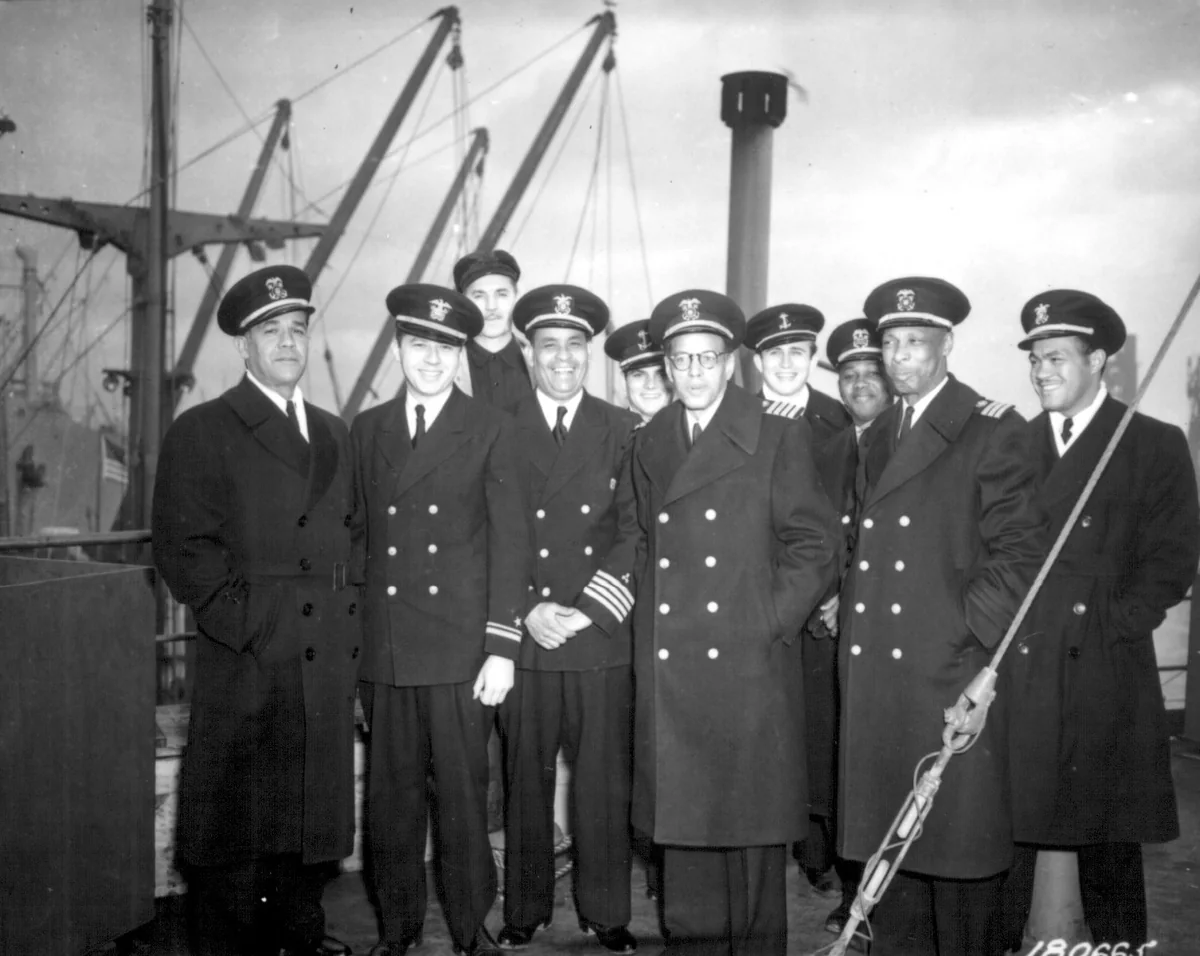
The sea offered work and a route out into the wider world. Hugh Mulzac, born on Union Island in 1886, became one of its most remarkable seafarers. After years of racial discrimination in merchant shipping, he took command of the American Liberty ship Booker T. Washington in 1942. He insisted on sailing with an integrated crew. His career connects this small island to the Second World War and the struggle against segregation.[8]
Migration remains part of family life. Union Islanders have built communities in the United States, Canada and Britain while maintaining ties at home. A University of the West Indies livelihoods study recorded remittances among household resources, alongside tourism, fishing, small businesses and other work. Money sent home is one part of that relationship; visits, community associations and practical help during a crisis are others.[9][10]
The Union Island Revolution of 1979
Saint Vincent and the Grenadines became independent on 27 October 1979. Barely six weeks later, on 7 December, an armed uprising led by Lennox “Bumba” Charles briefly challenged government control on Union Island. The event is often remembered locally as the Union Island Revolution.[11][12]
Prime Minister Milton Cato declared a state of emergency, and Vincentian forces, with assistance from Barbados, restored government authority. In his fortieth-anniversary account, attorney Steve Stewart links the uprising to economic hardship, poor amenities and a sense that the Grenadines were being neglected. Other interpretations place greater weight on separatism and the unsettled regional politics of the time.[12]
For residents, this was more than an unusual footnote in national politics. Arrests, detention and the aftermath left lasting memories. Accounts gathered at the 2019 commemoration show how differently the uprising is remembered, and how strongly those experiences still matter to families on the island.[12]
Clifton: A Working Harbour Becomes a Visitor Stop
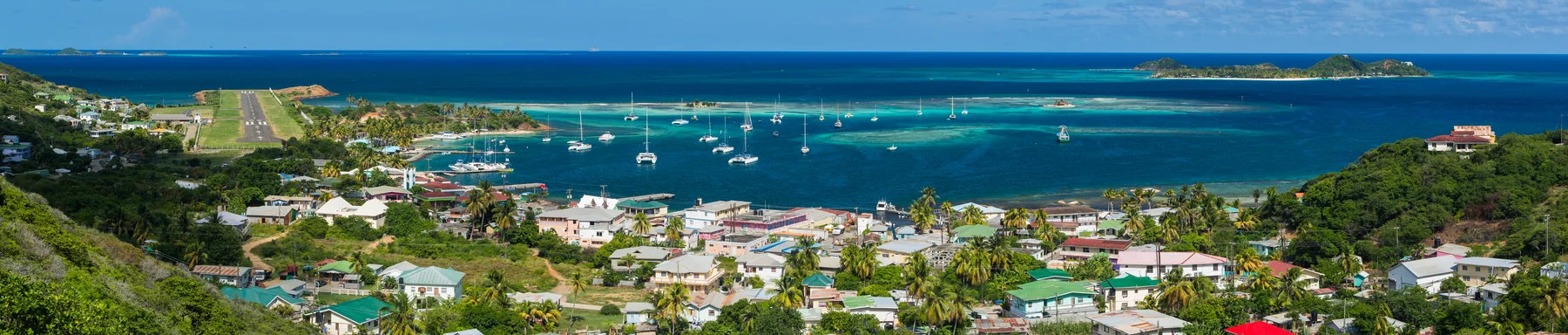
Long before kite holidays, visiting yachts brought business ashore. Clifton was a place to clear in, provision, buy water and fuel, find a meal, or arrange the next leg through the southern Grenadines. Those stops supported a network of shopkeepers, boat operators, mechanics, restaurants and small accommodation businesses.[13]
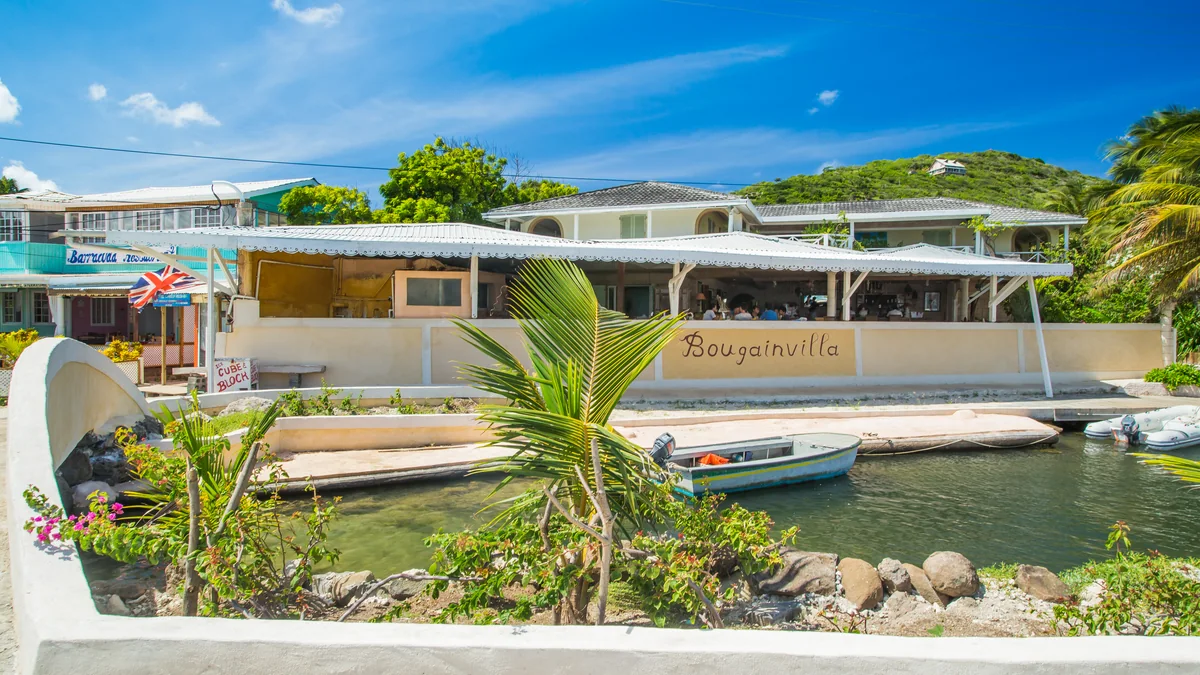
Anchorage Yacht Club and Bougainvilla became familiar names on that waterfront. A court record places Anchorage Yacht Club in existence by 1981. Bougainvilla is documented in a 2001 travel account and advertised its dock, water station and other services in 2007. Both helped make Clifton a meeting point between the life of the town and the people arriving by sea.[14][13]
Tourism changed over the years, but it was never the island’s only occupation. Fishing, trading, farming and work abroad continued alongside it. Many households combined different kinds of work, adapting to the season and the opportunities available.[9]
Kitesurfing Gives Visitors a Reason to Stay
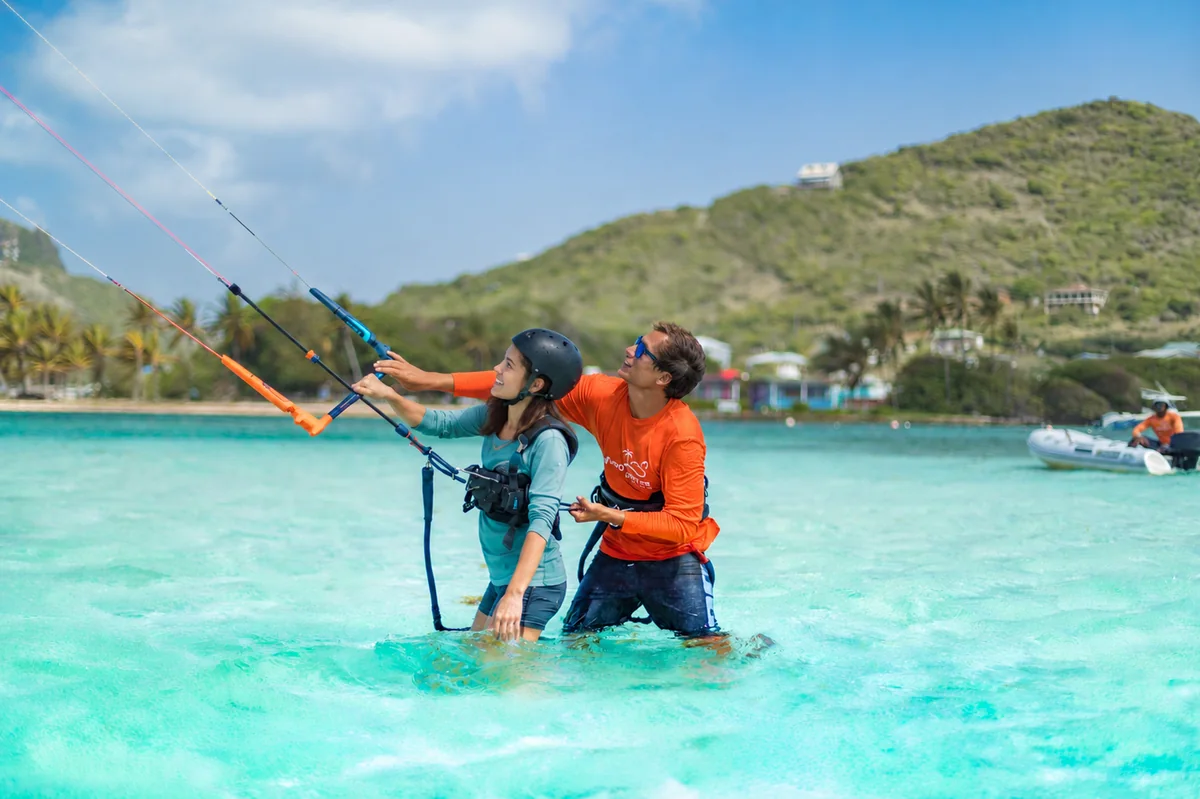
The early 2010s brought a different kind of visitor. Professional kitesurfer Jeremie Tronet developed JT Pro Center around Union’s trade winds, shallow lagoon and nearby riding spots. He was announcing the centre in September 2011; by January 2012, its blog was recording the first Full Moon Party.[15]
Instead of stopping briefly to refuel or take on water, kite guests could base an entire holiday on Union. In a 2016 account, Tronet described visitors staying for weeks or months, a partnership with Anchorage Yacht Club, sailors kiting from their boats, and local young people moving into instructor roles. This helped connect the school with rooms, meals, transport and other services around Clifton.[16]
Films, professional riders and word of mouth carried Union’s reputation further. By 2022, Yachting magazine was profiling Tronet’s role in raising the island’s international kitesurfing profile. Kite tourism did not replace the harbour economy; it added longer stays ashore and another reason for visiting yachts to remain nearby.[17]
1 July 2024: Beryl, Relief and Rebuilding
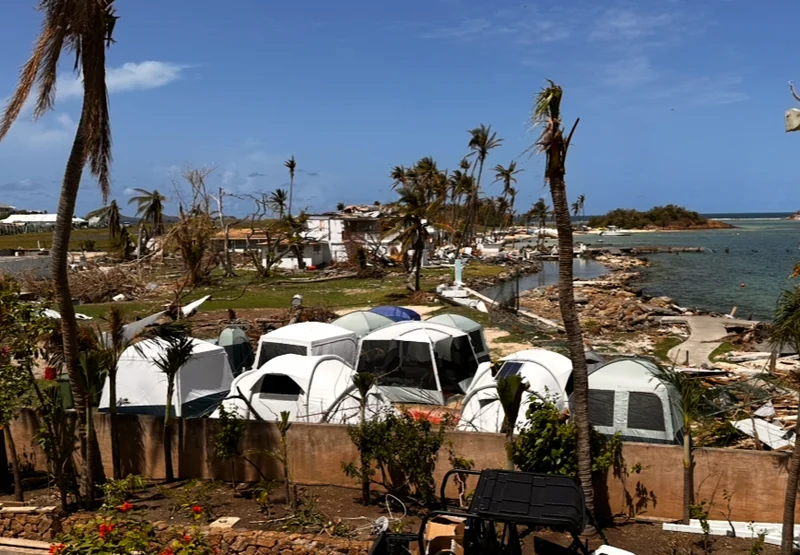
Hurricane Beryl devastated Union Island on 1 July 2024 as it crossed the southern Grenadines at Category 4 strength. Homes, businesses and public buildings lost roofs or suffered severe damage. Electricity, communications and normal supply routes were disrupted. The first questions were immediate and practical: where to sleep, how to find drinking water, and how to get help to people who needed it.[18]
Residents, local workers and volunteers carried much of that burden. Tronet was among those organising outside help from the first days, using his contacts in Martinique to buy supplies, raise donations and coordinate relief transport. Contemporary reporting documented the campaign and early deliveries. What began as an emergency response later developed into the JT Foundation.[19]
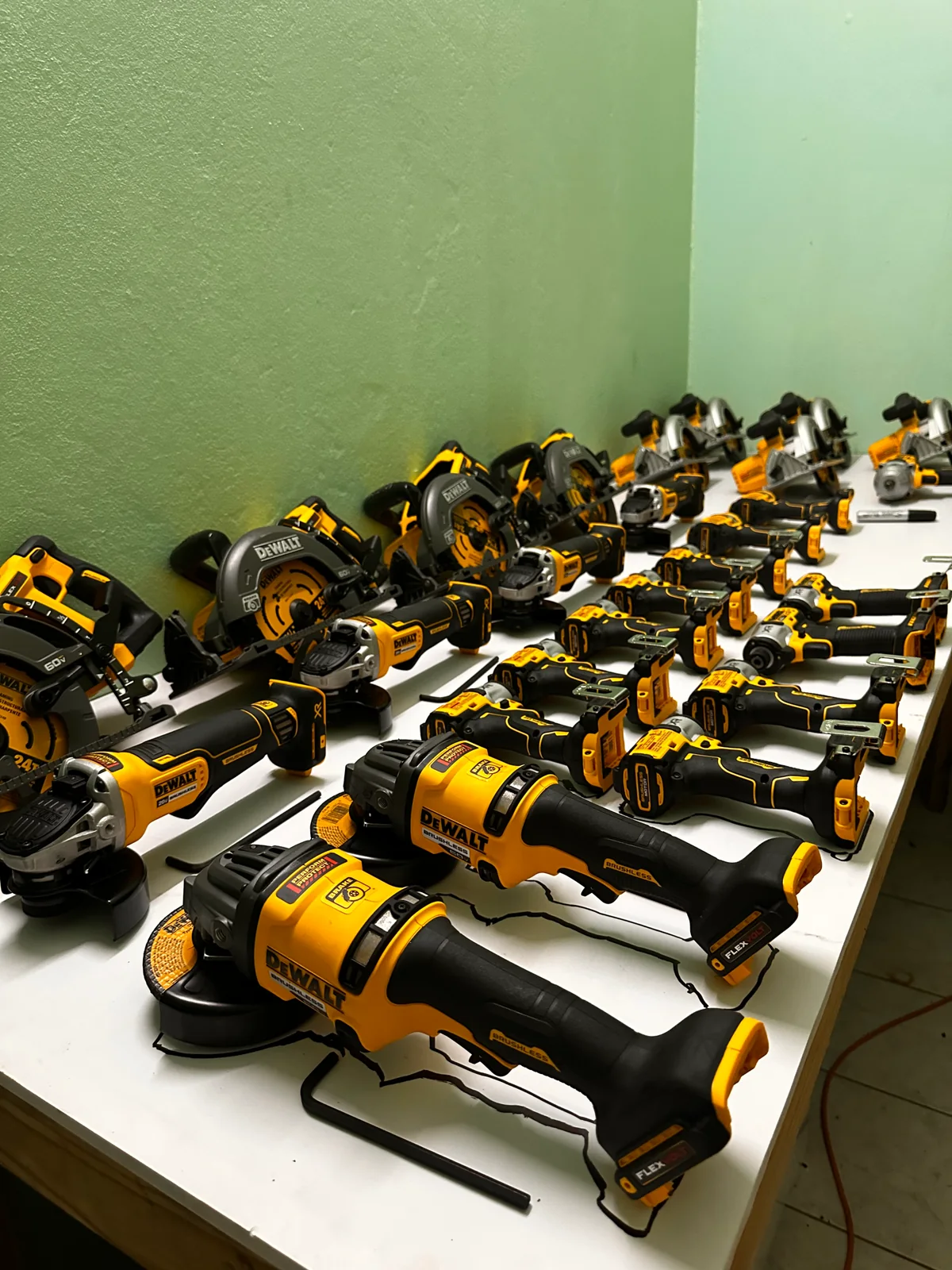
The foundation’s public record reports approximately US$523,000 in fundraising and partner-routed support across the recovery effort: GoFundMe donations before fees, together with a separate Sol Relief channel. Its work included drinking water and food, generators, solar lights, communications, shelter supplies, repairs and access to tools.[20]
Martinique’s residents, businesses and public institutions also mobilised. The French Navy’s Dumont d’Urville transported essential supplies to Union and other affected islands. Naval crews, pilots, skippers, local teams and donors helped turn offers of assistance into deliveries. This regional effort was larger than any one organisation.[21]
Longer-term reconstruction needed a sustained flow of labour, materials and equipment. Ian Wace became a major private backer through the Gumbolimbo Group, working with government and local partners. His support included roof reconstruction on Union Island and Canouan. Romanian tradespeople worked alongside local builders. Wace, Kestrel Shipping and Vincentian officials also coordinated a December 2024 shipment of machinery and building materials, including equipment donated from a project in Scotland.[22]
A particularly visible milestone came on 11 October 2025, when the new Clifton Ferry Terminal and Market opened. Built through a government-Gumbolimbo partnership, it replaced the market destroyed by Beryl and provided vending spaces and shelter for ferry passengers. Restoring a place to sell produce, meet neighbours and wait for a boat mattered to everyday commerce as well as to the appearance of the waterfront.[23]
Reconstruction continued into 2026, with further housing and public-facility work. Building and repair work became an important part of daily economic life, even as visitor businesses returned. The story is one of substantial progress made by residents, tradespeople, donors and partners together, not of every remaining need having disappeared.[24]
In the site’s September 2026 local update, restaurants are welcoming visitors again, while JT Pro Center and new accommodation projects are preparing their next openings. For a trip now, consult the current travel information, restaurants, places to stay and JT Pro Center updates. Recovery dates and individual opening plans can change.
Sources and Further Reading
- Fitzpatrick and colleagues, archaeological investigations on Mustique and Union, Caribbean Journal of Science, 2013. Union’s sites and dating evidence are discussed separately from those on neighbouring islands.
- Treaty of Paris, 1763, Article IX, Avalon Project, Yale Law School.
- John Edward Adams, Union Island: An Historical and Geographic Sketch, 1978–1979; public excerpt in Searchlight, 2014.
- UCL Legacies of British Slavery: Union Island estate records and the 1836 compensation claim.
- UK Parliament, the West Indian colonies and emancipation.
- Jean Besson, History, Culture and Land in the English-Speaking Caribbean, 2003, printed page 45.
- Government of SVG / Caribbean Environmental Health Institute, Union Island water-resources planning report, 2007. Used for historical climate and water-storage context.
- Library of Congress biography of Hugh Mulzac and US Maritime Administration account.
- Fernandez Amaya and Mahon, Union Island livelihoods study, UWI CERMES Technical Report 48, 2011.
- Union Island community gathering in Brooklyn, 2022; CARI-ON’s Union-born Canadian organisers; Union Island’s London and Canadian support groups, 2014.
- SVG House of Assembly, legislature historical perspectives.
- Steve Stewart, the December 1979 uprising; Donald De Riggs, the 2019 commemoration; Bishop and colleagues, scholarly regional comparison, 2022.
- Amal Thomas, Clifton harbour report and Bougainvilla advertisement, Caribbean Compass, April 2007, page 18.
- Court of Appeal judgment recording an Anchorage tenancy from 1981, 1988; Don Wiss’s 2001 travel diary. These establish presence, not exact opening dates.
- Tronet’s launch-era announcement, 27 September 2011; JT Pro Center’s Full Moon Party post, 12 January 2012.
- Jeremie Tronet, Sharing the Dream, Caribbean Compass, January 2016. An operator’s account, not an island-wide occupancy study.
- Kristin Baird Rattini, profile of Jeremie Tronet and Union Island, Yachting, 28 July 2022.
- World Meteorological Organization, Beryl report, July 2024; United Nations recovery account, July 2025.
- Early relief reporting, 3 July 2024; The Guardian, 6 July 2024; dated campaign updates.
- JT Foundation’s public recovery record, checked September 2026. The approximately US$523,000 total is the organiser’s cumulative reporting across two channels, not an independent financial audit.
- French armed forces response, 17 July 2024; Martinique prefecture account, 29 July 2024.
- Reporting on Wace-backed roof repairs, January 2025; machinery and materials shipment, January 2025; Romanian workforce report, March 2025.
- Government handover notice; market opening report, October 2025.
- Continuing reconstruction partnership, July 2026; SVG Today, 24 August 2026, page 5.
Archaeological findings, colonial records, scholarly histories, local recollections and operators’ accounts answer different questions. Dates and numerical claims are qualified where the evidence does not support greater precision. Modern photographs illustrate places and activities; only the explicitly dated archival images are presented as period material. The September 2026 reopening context was supplied by local operator Jeremie Tronet.